Welcome, Visitor!

This course website offers a glimpse of a course I’ve proposed as a Kilachand Honors Seminar. My proposal draws its structure from a Rhetoric 102: Research and Writing course I used to teach at CGS, calling on students to take the lead in teaching themselves and one another about 1960s America through independent research projects, collectively forming a scholarly community / research group.

The website you are viewing is a modified version of the site I developed for that earlier Rhetoric 102 course, and still contains content added by students in the course of their research.

  • Fragments of the Past are primary sources that struck students as worthy of further attention and discussion.
  • Research Findings are major assignments from Units 1 and 2, categorized by topic.
  • Sixties Ficitons catalogs work completed for the final, text-in-context unit.

1960s America: topics list

In this first phase, we will collectively develop a basic understanding of the Sixties. One student from each section will assume responsibility for researching one of the following aspects of the era, each a different “slice of history.” Working in collaboration with students from the other sections, you will (1) dig up quality secondary sources, (2) collaborate in writing a report, and (3) publish an annotated bibliography of recommended sources on your topic. In addition, working individually, you will (4) create and deliver an oral report. Continue reading

Course Rules

  • Plagiarism is a very serious offense in this course, at CGS, and in the wider BU community.
  • Be respectful of me and of your fellow students in lecture and section. Focus on what other people are saying, and join in the discussion with insights or questions of your own.
  • Bring your laptop to class so you can access your writing and other course materials as needed.
  • Keep your laptop closed at all other times. Keep your phone in your bag, not your lap. Stand up to the power of your devices; don’t let them take charge of your attention.

Section 10.1

Central Text: Preliminary Notes

Make a preliminary choice of main text: list of options. Read the book or watch the movie. Take some preliminary notes, as follows:

First, make a digest of key characters, memorable lines and focal scenes from your central text.

Then, in a second section:

  • If you’re working with a film, create a digest of the movie’s cinematographic touches: memorable use of camera angle, non-diagetic sound, etc.
  • If you’re working with a novel, create a digest of the book’s novelistic touches: metaphors, narratorial perspective, etc.
  • If you’re working with a TV show, create a digest of show’s classic moves: the camera angles, use of a studio audience, gag timing, etc. which make different episodes all instances of a common style
  • If you’re working with a comic book or a musician, contact me for instructions.

Finally, in a third section, discuss a key theme of the work, something which might serve as a starting point for answering the question, “What is this book/film/song about?”

Reading: Scholarly Article on In the Heat of the Night

Counts as bonus HW
Download and read Andrea Levine, “Sidney Poitier’s Civil Rights.”

  1. What is Levine’s thesis? Identify one or more places in the essay where she states her main claim.
  2. What preliminary understanding does Levine take as her starting point? Note one or more places in the article where she establishes the preliminary understanding that her interpretation will move beyond.

Roadmap for the Semester

Rhetoric 102 provides the research skills and analytical tools required for advanced undergraduate studies. This semester you will do college-level research on several topics, present your findings to the class, and write three essays. We will broaden our focus from writing to cover powerpoint presentations, the research process, and bibliographic skills. Because research benefits from deep immersion, the whole semester will center on the same overarching field of study: 1960s America. But these projects will approach the era from very different angles. Continue reading

Course Philosophy

This course is founded on several fundamental principles:

  1. When it comes to the topical focus of our course (1960s America), the students are the primary teachers. Each of you is responsible for researching the topics you choose, and then for teaching that material to your fellow classmates. This is emphatically NOT a lecture course.  90% of material presented in the classroom should come from you, and only 10% from me. Continue reading

Why 1960s America?

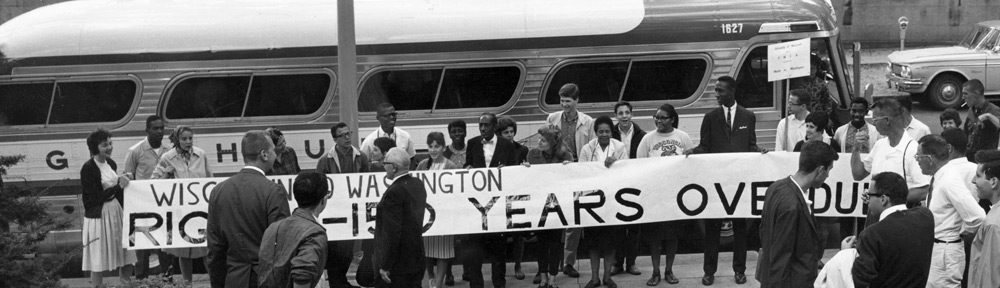
In the sixties, tensions that had been kept under wraps in the prior decade erupted dramatically onto the public stage, tearing the social fabric in ways that still resonate today. The struggle for Civil Rights could no longer be contained to just the South, forcing whites in other parts of the country to come to grips with their own legacy of racism. Feminists found a voice in the writings of Betty Friedan and Gloria Steinem and by the end of the decade had organized a national movement. Student radicals organized around all manner of causes, but most powerfully against the war in Vietnam and the Military Industrial Complex which was seen as sponsoring it. Rock music, emblematic of youth culture, voiced a generation’s idealism, proclaiming “Love Is All You Need” and “3 Days of Peace & Music.” Continue reading

Lecture 14

Seven Measures of Learning, part 2

End-of-Year ePortfolio

As an aid in thinking about your education, the college has created a rubric of seven essential skills. These are cross-disciplinary in nature, representing methods that are taught and employed in most if not all of your courses in college.

  1. Written and oral communication
  2. Gathering, analyzing, and documenting information
  3. Awareness of specific historical, literary, and cultural contexts
  4. Rhetorical and aesthetic conventions
  5. Critical Thinking and perspective-taking
  6. Integrative and applied learning
  7. Quantitative methods

We discussed these 7 skills in lecture a week ago, but here’s a refresher course to explain in more detail.

For class, download and fill out this worksheet, designed to help you brainstorm which of the many assignments you’ve done this year best exemplifies your mastery in each of these seven categories of learning.