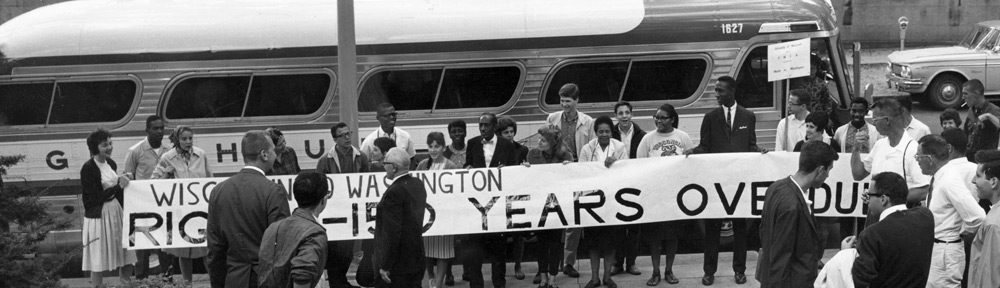
Rhetoric 102 provides the research skills and analytical tools required for advanced undergraduate studies. This semester you will do college-level research on several topics, present your findings to the class, and write three essays. We will broaden our focus from writing to cover powerpoint presentations, the research process, and bibliographic skills. Because research benefits from deep immersion, the whole semester will center on the same overarching field of study: 1960s America. But these projects will approach the era from very different angles.
The semester begins with a historical approach to the culture of this period, with students working in teams to master a key topic for the period, such as Second Wave Feminism or the Civil Rights Movement. Students from different sections collaborate in researching their chosen topic and in writing a research report and bibliography. Students will also report team findings in oral reports to their sections. This phase of research is about mastering the topic and teaching it, both orally and in writing. During this phase you and your teammates are not expected to present original insights; your goal is simply to master what prior scholarship says about the topic.
The second phase of the semester focuses on primary source research, amassing a body of evidence as a basis for arguing original claims about the prevailing hopes, fears, and beliefs of 1960s American society. You will use primary sources as evidence in two essays: a joint paper written for both your Humanities and Rhetoric classes, and in a historical paper written for this class alone. (If you are not enrolled in Coffman’s Humanities 102 course, please meet with me ASAP to discuss how best to modify the first of these two assignments.)
Whereas the first unit focuses on rehearsing the work of prior scholars to bring your fellow students up to speed, the historical paper of the second unit takes prior scholars as its starting point, and employs primary sources as basis to complicate and enrich our understanding of a very narrow topic: a particular event or individual.
Finally, the third phase of the semester takes a literary bent, focusing on a novel, movie, tv show, comic book or other cultural artifact from the period we’re studying. Your goal is to give new significance to the text by examining it in relation to its historical context, drawing on a slice of history that one of your classmates covered in the first part of the term. In this way, the research of your fellow students will enable you to quickly master a new topic, applying that knowledge to enrich understanding of your movie, novel, or other cultural artifact.