Charles Henebry, College of General Studies, Boston University
Roadmap for the Semester
Rhetoric 102 provides the research skills and analytical tools required for advanced undergraduate studies. This semester you will do college-level research on several topics, present your findings to the class, and write three essays. We will broaden our focus from writing to cover powerpoint presentations, the research process, and bibliographic skills. Because research benefits from deep immersion, the whole semester will center on the same overarching field of study: 1960s America. But these projects will approach the era from very different angles.
The semester begins with a historical approach to the culture of this period, with students working in teams to master a key topic for the period, such as Second Wave Feminism or the Civil Rights Movement. Students from different sections collaborate in researching their chosen topic and in writing a research report and bibliography. Students will also report team findings in oral reports to their sections. This phase of research is about mastering the topic and teaching it, both orally and in writing. During this phase you and your teammates are not expected to present original insights; your goal is simply to master what prior scholarship says about the topic.
The second phase of the semester focuses on primary source research, amassing a body of evidence as a basis for arguing original claims about the prevailing hopes, fears, and beliefs of 1960s American society. You will use primary sources as evidence in two essays: a joint paper written for both your Humanities and Rhetoric classes, and in a historical paper written for this class alone. (If you are not enrolled in Coffman's Humanities 102 course, please meet with me ASAP to discuss how best to modify the first of these two assignments.)
Whereas the first unit focuses on rehearsing the work of prior scholars to bring your fellow students up to speed, the historical paper of the second unit takes prior scholars as its starting point, and employs primary sources as basis to complicate and enrich our understanding of a very narrow topic: a particular event or individual.
Finally, the third phase of the semester takes a literary bent, focusing on a novel, movie, tv show, comic book or other cultural artifact from the period we're studying. Your goal is to give new significance to the text by examining it in relation to its historical context, drawing on a slice of history that one of your classmates covered in the first part of the term. In this way, the research of your fellow students will enable you to quickly master a new topic, applying that knowledge to enrich understanding of your movie, novel, or other cultural artifact.
Course Philosophy
This course is founded on several fundamental principles:
- When it comes to the topical focus of our course (1960s America), the students are the primary teachers. Each of you is responsible for researching the topics you choose, and then for teaching that material to your fellow classmates. This is emphatically NOT a lecture course. 90% of material presented in the classroom should come from you, and only 10% from me.
- My function is to help you master research methods. And to do this I will lecture, encourage, criticize and exhort you to work harder. It's easy to do half-baked research; my job is to push you to embrace the struggle of real research.
- Collectively, you form a scholarly community, something like a "Think Tank." Scholars working on projects within larger communities tend to produce a higher quality of research, because their work is inspired and enlivened by the discoveries of others. You will share findings with others in two ways:
- Fragments of the Past: primary sources that help the past come alive, from advertisements to political speeches or even telling economic data. You'll share these by adding a comment to any of the four broad topical headers in the "Fragments" menu at the top of each page on this site
- Research Findings: you will make your Written Report, Annotated Bibliography and Essay available for download by adding them as file uploads in comments added to pages dedicated to your narrow topic.
Why 1960s America?
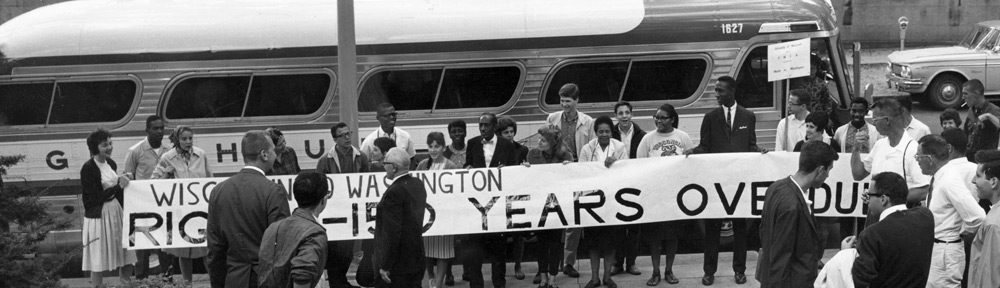
In the sixties, tensions that had been kept under wraps in the prior decade erupted dramatically onto the public stage, tearing the social fabric in ways that still resonate today. The struggle for Civil Rights could no longer be contained to just the South, forcing whites in other parts of the country to come to grips with their own legacy of racism. Feminists found a voice in the writings of Betty Friedan and Gloria Steinem and by the end of the decade had organized a national movement. Student radicals organized around all manner of causes, but most powerfully against the war in Vietnam and the Military Industrial Complex which was seen as sponsoring it. Rock music, emblematic of youth culture, voiced a generation's idealism, proclaiming "Love Is All You Need" and "3 Days of Peace & Music."
These forces for social reform were resisted by what President Nixon called the "Silent Majority" of Middle America, that segment of the population that still clung to a vision of American exceptionalism forged during World War II and refined in the years of plenty following the war.
But to characterize the 1960s as riven by a culture war setting activist youth against stodgy middle-class conformity is to vastly overestimate the degree to which Sixties radicals shared a common vision or program for social reform. To the contrary, Black activists distrusted the dedication of white student radicals, while feminists regarded both movements as no less sexist than mainstream society. In this troubled time, a crucial element of our present day sensibility came into being: outraged idealism feeding near-total cynicism.
Beyond this, the era is recent enough that you can do oral history research by interviewing your parents and grandparents. At the same time, it's far enough distant as to be just a little alien. You'll find that the people of this era brought to the world an oddly different set of fundamental beliefs. This encounter with the alien is what makes history not just interesting but morally vital: it teaches us that our core beliefs may feel fundamental to us, but they are not eternal. To your grandchildren, we of today will seem no less odd (even perverse) than the people who will be the focus of our study.
Semester Grading
Your grade will be calculated based on the following factors, with the grade weight shown in parenthesis:
- Unit 1: Master a Topic (work as group)
- Written Report (2)
- Oral Presentation (2)
- Annotated Bibliography (2)
- Unit 2: the Search for Identity in America
- Joint HU-RH Essay (4)
- Unit 3: Historical Essay
- Research Paper (4)
- Unit 4, Literary Text-in-Context Essay:
- Research Paper (4)
- Oral Presentation (2)
- Miscellaneous:
- Homework (1)
- Class Participation (1)
- Peer Responses (1)
- ePortfolio (1)
In addition, a grade penalty will be assessed for unexcused absences beyond 3.
Course Rules
- Plagiarism is a very serious offense in this course, at CGS, and in the wider BU community.
- Be respectful of me and of your fellow students in lecture and section. Focus on what other people are saying, and join in the discussion with insights or questions of your own.
- Bring your laptop to class so you can access your writing and other course materials as needed.
- Keep your laptop closed at all other times. Keep your phone in your bag, not your lap. Stand up to the power of your devices; don't let them take charge of your attention.
Course Website
Due dates and assignments are listed on the course website, rhet102.commacafe.org