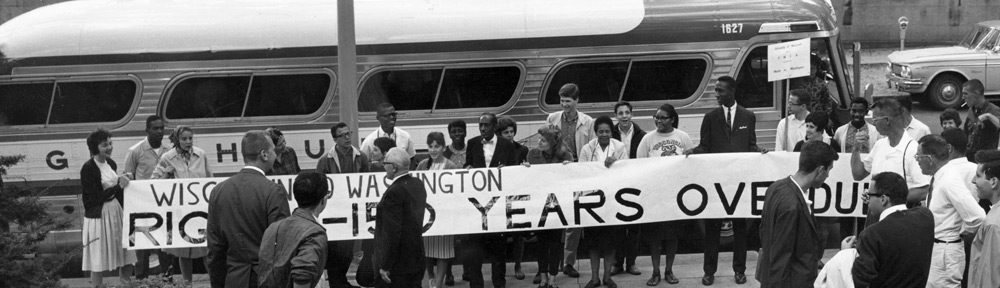
In the sixties, tensions that had been kept under wraps in the prior decade erupted dramatically onto the public stage, tearing the social fabric in ways that still resonate today. The struggle for Civil Rights could no longer be contained to just the South, forcing whites in other parts of the country to come to grips with their own legacy of racism. Feminists found a voice in the writings of Betty Friedan and Gloria Steinem and by the end of the decade had organized a national movement. Student radicals organized around all manner of causes, but most powerfully against the war in Vietnam and the Military Industrial Complex which was seen as sponsoring it. Rock music, emblematic of youth culture, voiced a generation’s idealism, proclaiming “Love Is All You Need” and “3 Days of Peace & Music.”
These forces for social reform were resisted by what President Nixon called the “Silent Majority” of Middle America, that segment of the population that still clung to a vision of American exceptionalism forged during World War II and refined in the years of plenty following the war.
But to characterize the 1960s as riven by a culture war setting activist youth against stodgy middle-class conformity is to vastly overestimate the degree to which Sixties radicals shared a common vision or program for social reform. To the contrary, Black activists distrusted the dedication of white student radicals, while feminists regarded both movements as no less sexist than mainstream society. In this troubled time, a crucial element of our present day sensibility came into being: outraged idealism feeding near-total cynicism.
Beyond this, the era is recent enough that you can do oral history research by interviewing your parents and grandparents. At the same time, it’s far enough distant as to be just a little alien. You’ll find that the people of this era brought to the world an oddly different set of fundamental beliefs. This encounter with the alien is what makes history not just interesting but morally vital: it teaches us that our core beliefs may feel fundamental to us, but they are not eternal. To your grandchildren, we of today will seem no less odd (even perverse) than the people who will be the focus of our study.